
Former Intern is Shaping San Marcos’ Future
Follow ( 0 Followers ) X Follow E-mail : * Follow Unfollow
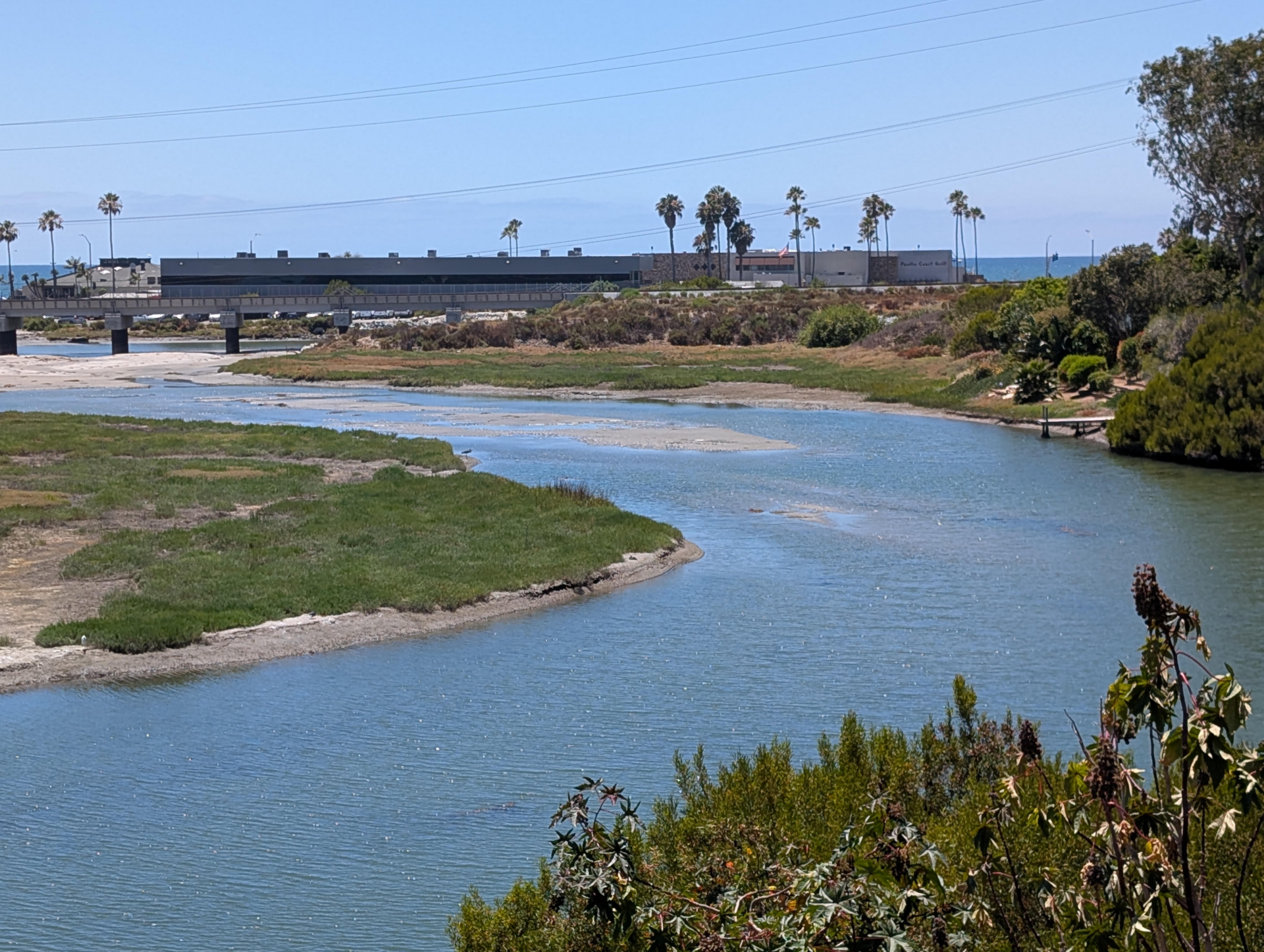
At Nature Collective, our highest priority is safeguarding the diverse, fragile ecosystem of the San Elijo Lagoon. A critical part of this mission is keeping the lagoon’s inlet connected to the Pacific Ocean. When the inlet closes, water quality declines, and rising floodwaters could harm vegetation, threatening the habitats that endangered species rely on for survival. Nature Collective closely monitors these dynamics and uses real-time data to determine the optimal timing for opening the inlet, given available funding.
Thanks to our March sand removal project, which cleared over 22,000 cubic yards of sand west of the railroad bridge using the funding available at the time, the inlet has remained open throughout the summer. However, the funding available in March did not allow us to remove all the sand from the channel, and more sand has accumulated over the summer, extending beneath the railroad bridge toward the Nature Center.
Addressing this buildup is a significant financial challenge. The March sand removal project completely exhausted our partial endowment dedicated to 2026 maintenance. As a result, those funds cannot cover the removal of the sand currently built up in the channel. Future work is strictly dependent on securing external funding. Fortunately, sand levels did not increase after this week’s strong storm activity.
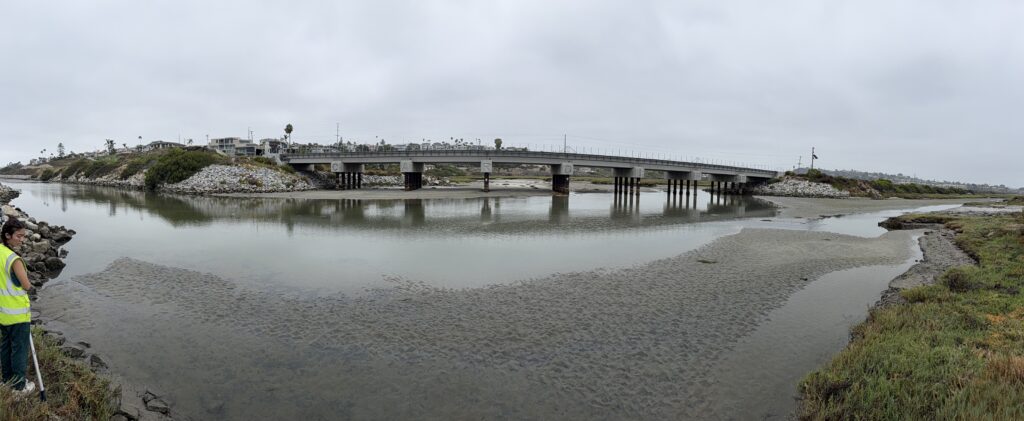 Above: San Elijo Lagoon inlet at low tide showing the exposed sand accumulation
To resolve the current sand accumulation, we devised a plan to use land excavation equipment to gain initial access to clear sand east of the railroad bridge. State and federal agencies have approved an adaptive management plan for this effort, funded by SANDAG as part of the San Elijo Lagoon Restoration Project, which served as mitigation for the impacts of expanding the railroad and Interstate 5. Once the funding is secured, the full sand removal process will take about two months.
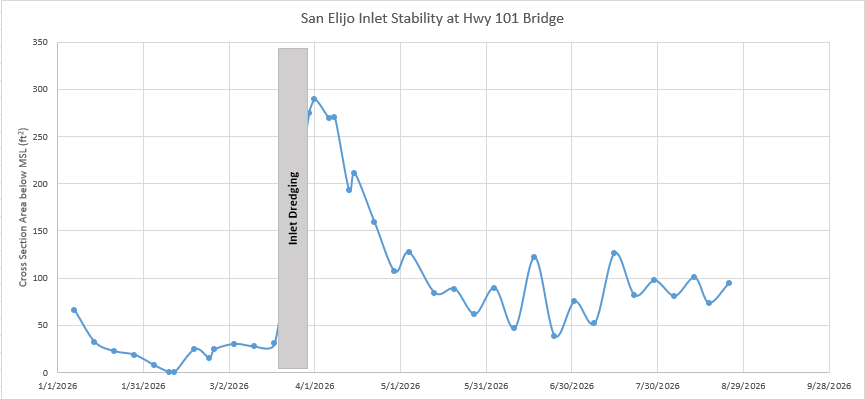
Our strategy is based on the best information we currently have, but we are facing a season of significant unknowns due to El Niño. Our preferred window to complete the two-month excavation is April and May 2027, safely after the stormy season. Should a closure happen this fall/mid-winter, we may need to execute a brief 1- to 2-day “emergency” clearing, if necessary and if funding allows.
El Niño remains the ultimate wild card. Heavy winter rains from the watershed could act as a natural pressure washer, generating strong water flows that keep the inlet open. On the other hand, El Niño could bring massive ocean swells that push even more sand into the inlet without delivering the inland rain needed to push it back out. Because of these unpredictable variables, we are closely monitoring the lagoon and remain ready to adapt our plans to protect this vital coastal wetland.
Follow ( 0 Followers ) X Follow E-mail : * Follow Unfollow
Follow ( 0 Followers ) X Follow E-mail : * Follow Unfollow
Follow ( 0 Followers ) X Follow E-mail : * Follow Unfollow