
Waters of San Elijo Lagoon
Follow ( 0 Followers ) X Follow E-mail : * Follow Unfollow
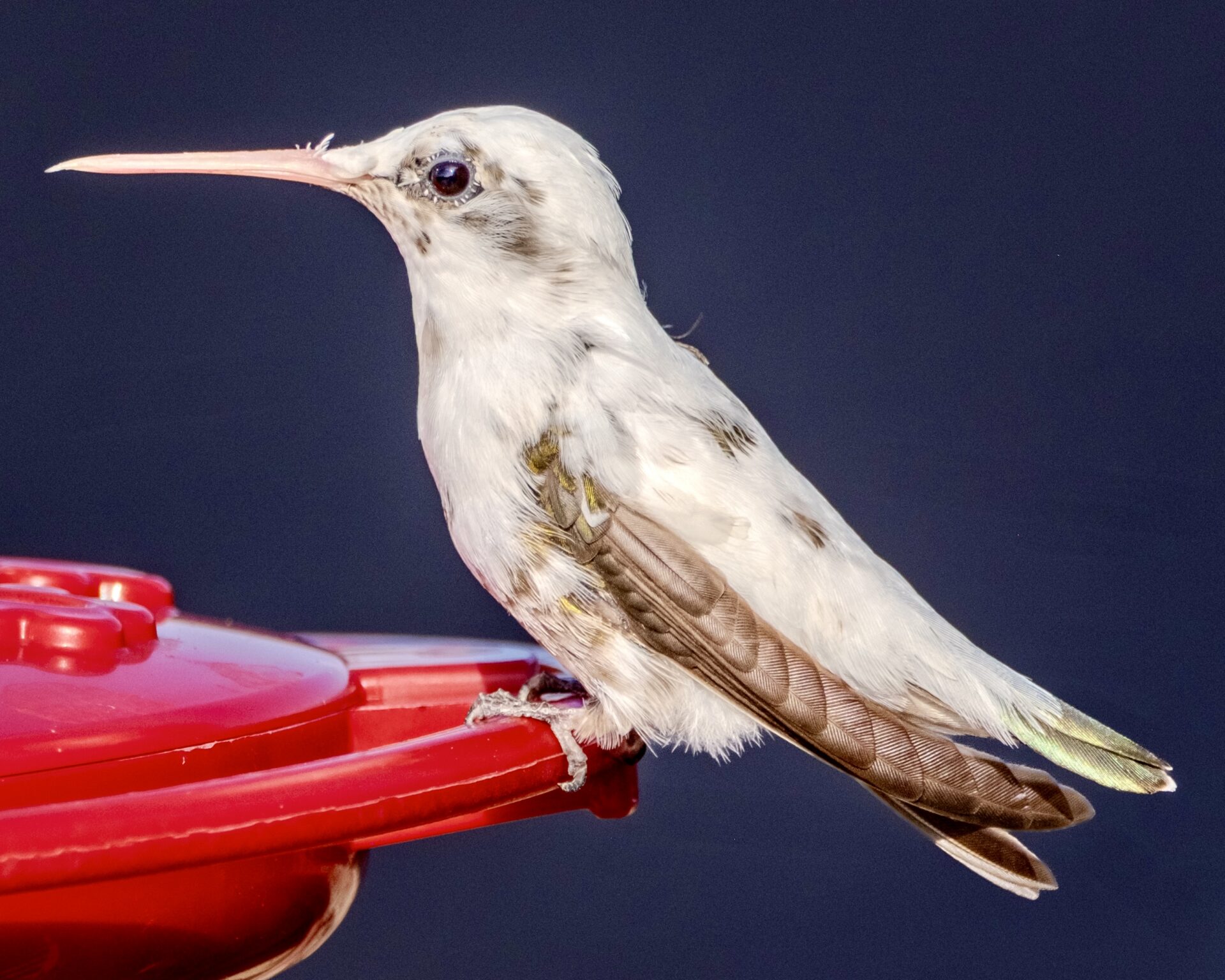
Spotting a leucistic or partially leucistic hummingbird in the wild is a rare, remarkable sight and a vivid reminder of the countless surprises local habitats and gardens hold, as well as the importance of open space. A longtime supporter and friend of the Nature Collective who lives adjacent to the San Elijo Lagoon Ecological Reserve recently shared that they had seen a partially leucistic hummingbird at their feeder. We excitedly headed out to try to capture the sighting on camera, and we succeeded.
If you watch Anna’s Hummingbirds (Calypte anna) dart quickly around, you’ll notice their shiny green backs and bright magenta throats for the males and less magenta on the females but still that shiny green back. Sometimes, though, genetics produce a surprising change: a bird that’s partly leucistic. Unlike albinism, which makes a bird completely white, pink-eyed, and without pigment, leucism affects only some color. It keeps the bird’s eyes, beak, and feet dark, but some or most of the feathers turn pale or chalk white.
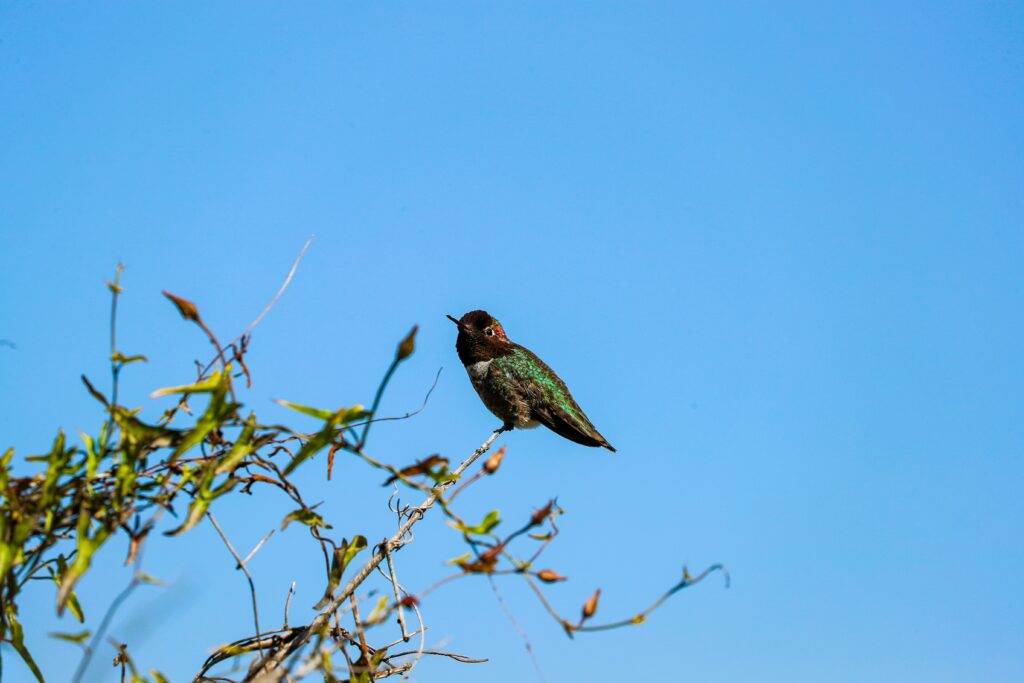
Above: Anna’s Hummingbird at San Elijo
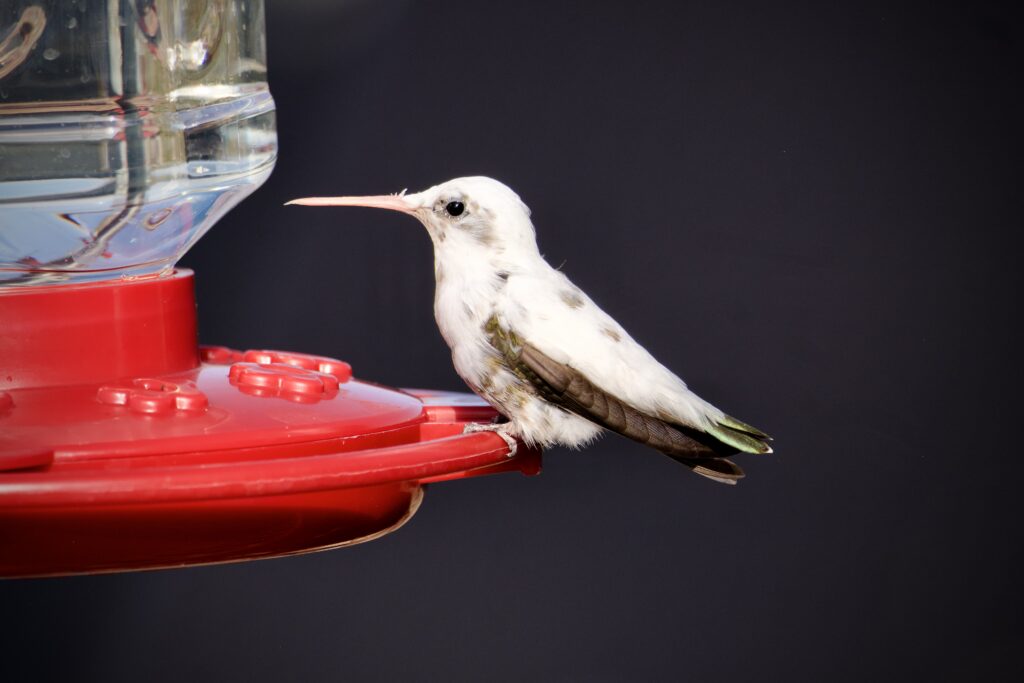
Above: Partially leucistic Anna’s Hummingbird at feeder
This unusual color happens when melanin, the pigment that gives feathers their color, doesn’t get deposited properly in certain parts of a bird’s feathers as it grows. This causes white patches next to the bird’s normal green or pink feathers. Living with leucism can make survival harder. Melanin helps strengthen feathers, so white flight feathers wear out faster because these birds flap their wings very quickly—sometimes 50 to 80 times per second. The white patches also make hummingbirds easier for predators to see because they don’t blend into their environment as well. Even though it looks different, this bird does the same things as other hummingbirds. It defends feeders, catches small insects, and drinks nectar.
Follow ( 0 Followers ) X Follow E-mail : * Follow Unfollow
Follow ( 0 Followers ) X Follow E-mail : * Follow Unfollow